📖 What Exactly Is League of Legends?
At its core, League of Legends is a multiplayer online battle arena (MOBA) video game developed and published by Riot Games. It was inspired by the Defense of the Ancients (DotA) mod for Warcraft III and launched in October 2009. Since then, it has grown into one of the most widely played games on Earth, with an active player base that peaked at over 180 million players per month in recent years. If you've ever wondered what is League of Legends and why it dominates the esports scene, this guide breaks down every key aspect.
League of Legends places two teams of five champions against each other on a map called Summoner’s Rift in the game’s core mode. Each player controls a single champion — a character with a unique kit of abilities — and cooperates with teammates to destroy the enemy Nexus, a structure deep in their opponent’s base. The game blends real-time strategy, action role-playing, and team-based tactical depth into something entirely its own.
But the question what is League of Legends cannot be answered purely by describing its mechanics. It is a cultural ecosystem with a thriving competitive scene, a deep storyline woven into champion lore, a spin-off phenomenon in Netflix’s Arcane, and an expanding universe including an upcoming League Of Legends Mmo that fans have eagerly awaited for years.
🎮 Core Gameplay: The Summoner’s Rift Experience
Summoner’s Rift is the main stage for League of Legends. It is a symmetric three-lane map with a jungle in the middle. Each lane features turrets that defend the path to the Nexus. Teams must push waves of minions, destroy turrets, kill epic monsters, and eventually break through the enemy base. The core gameplay loop is equal parts mechanical skill, macro strategy, and team coordination.
Lanes and Roles on Summoner’s Rift
The game’s 5v5 structure naturally creates distinct positions, each with unique responsibilities:
- Top Lane (Solo Top) — Typically a durable bruiser or tank who engages offensives. This lane is an island where champions often fight in isolation until the mid-game.
- Jungler — Roams the jungle between lanes, securing neutral objectives like Dragon and Baron Nashor while creating pressure through surprise “ganks.”
- Mid Lane — High impact position with short lane access to both other lanes; often played by mages or assassins.
- Bot Lane — ADC (Attack Damage Carry) — A long-range damage dealer who scales into the late game and relies on peel and protection from the support.
- Support — Plays babysitter to the ADC early on, warding the map, engaging fights, and providing utility. The Best Support League Of Legends champions can single-handedly turn the tide of battle with well-timed crowd control.
The Objective Game: Dragon, Baron, Rift Herald
Modern League of Legends revolves around neutral objectives. Elemental Drakes spawn in the river and grant stacking buffs based on their elemental type. Slaying four drakes triggers the Dragon Soul, a game-defining buff. Baron Nashor spawns at 20 minutes and grants a powerful minion-enhancing buff that can push defeat through comebacks. The Rift Herald appears in Baron’s pit pre-20-minutes and helps crack open structures.
The 2025 pre-season introduced even more dramatic comeback mechanics — brutal “Feats of Strength” and the Atakhan, Bringer of Ruin tactical trap, forcing teams to make defining choices about who will scale first.
🛡️ Champions: The Soul of League
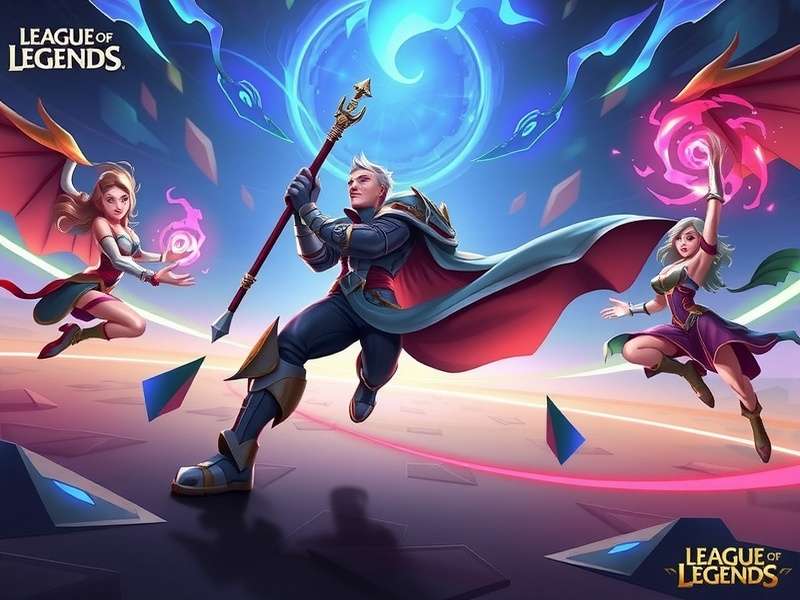
As of June 2025, League of Legends features 170+ unique champions. Each champion has a distinct backstory, visual identity, and set of four abilities plus a passive. The roster spans everything from a yordle gunner (Tristana) to a cosmic dragon (Aurelion Sol), giving players nearly infinite stylistic variety.
Champion Classes and Playstyles
Riot categorises champions into rough classes:
- Fighters / Bruisers (Darius, Jax, Irelia) — durable melee damage dealers.
- Mages (Syndra, Orianna, Ahri) — spellcasters with burst or crowd control.
- Assassins (Zed, Katarina, Talon) — burst-heavy killers that hunt squishy targets.
- Tanks (Sion, Malphite, Ornn) — soak damage and disrupt the enemy.
- Marksmen / ADCs (Jinx, Kai’Sa, Aphelios) — sustained ranged physical damage.
- Supports (Thresh, Lulu, Nami) — enabling allies through healing, shielding, and crowd control.
Riot regularly reworks older champions to keep gameplay fresh. Each League Of Legends New Champion release brings an incredible amount of hype. The latest champion in 2025 is Keylle, the Echo Weaver — a time-bending enchanter mage that has already reshaped the mid-lane meta.
Champion design has evolved dramatically since 2009. Early champions were simpler, with straightforward passives and line-up abilities. Nowadays, Riot experiments with unique resource systems, shape-shifting mechanics, and complex skill expressions. In parallel, the art team has raised the bar for splash art, in-game models, and animation quality.
Champion Mastery and Skins
Riot monetises through cosmetic skins — visual makeovers for champions — plus chromas, emotes, and battle passes. The skill expression is deeper than it appears. Some of the most legendary support mains climb to Challenger rank entirely through mastery of off-meta picks. The Best Support League Of Legends players set the tempo for the entire team, proving that the role is far more than a babysitter.
🏆 Competitive Esports: The World’s Biggest Stage
League of Legends esports is a behemoth. The League of Legends World Championship — known as Worlds — attracts tens of millions of viewers. In 2024, the final between T1 and BLG set a record average viewership of over 60 million. For 2025, anticipation has reached fever pitch, especially with the change in format for League Of Legends Worlds 2025 Game 1 being expanded into a multi-day opening event.
Regional Leagues
The competitive ecosystem is divided into major regions:
- LCK (Korea) — the historic powerhouse.
- LPL (China) — hyper-aggressive teams like JDG and BLG.
- LEC (Europe) — the home of underdog magic and inventive drafts.
- LCS (North America) — consistently working to break global expectations.
- LTA (Americas) — the merged league created in 2025.
- LCP (Asia-Pacific) / LPL etc. — making strong headway.
UK and British fans regularly fill arenas in London’s Copper Box or the revamped SSE Arena for EU Masters finales. The British prime-time slot means some Worlds matches play out in the early hours — but the coffee-fueled community watches anyway.
The Perfect Game: Strategic Masterclass
Watching a masterclass game of League is like reading a chess game written in fire. League Of Legends Worlds 2025 Game 1 is expected to be remembered as one of the most tactical opening matches in history. In the 14.10-era meta, vision denial and tempo control separate good teams from champions. Coaches compile insane spreadsheets of timings and jungle pathing patterns, yet everything can change with a single misclick duel.
“The gameplay depth of League of Legends means that even professional players discover new tricks every patch. It’s a game where you never fully master it — you just keep climbing.” — Jackie ’Jackets’ Chen, LEC play-by-play caster
🌍 The Future: League of Legends MMO & Universe Expansion
Riot announced a full-scale League of Legends MMO project back in 2020. Although details remain agonisingly scarce, executive producer Ghostcrawler (Greg Street) has teased open-world Runeterra exploration, branching storylines, and true class-based progression. The League Of Legends Mmo is being built for players who want to live inside the rich lore of Runeterra rather than just competitively battle on Rift.
The MMO is likely to feature:
- Persistent open-world zones in regions like Demacia, Noxus, Piltover, and Zaun.
- Dynamic class system inspired by champions — players might not pick “classes” but instead champion-style disciplines.
- Crafting, PvP and raid-style content calibrated to LoL’s gritty fantasy.
- Deep lore exploration — expect to uncover the mysteries of the Void and the ancient Freljord.
While waiting for the MMO, Riot has expanded with other games like Teamfight Tactics, Legends of Runeterra, and VALORANT. If you enjoy Riot’s world-building in LoL, you should absolutely Download Valorant — it is their bold first-person shooter built on an alternate Earth timeline, and it shares the same obsessive design philosophy.
Card Game Breathing New Life
Legends of Runeterra is Riot’s digital collectible card game. It transports the champions and mechanics of League into a deep, turn-based duel format. If you’ve never tried it, watching the League Of Legends Card Game Opening sequence is an excellent way to experience the cinematic polish that Riot invests across all its properties.
🎵 Music, Arcane, and Cultural Impact
League of Legends is also a music phenomenon. K-pop groups, hip-hop collaborations, a jazz-infused soundtrack, and orchestral reworks of champion themes keep fans listening across genres. In 2024, the collaboration with rapper Doja Cat for the Worlds anthem generated over 80 million streams in the first week. But the biggest pop-culture explosion was undeniably Arcane, the animated series.
Arcane Season 1 won 9 Annie Awards and 4 Emmy Awards, and Season 2 (concluding in late 2024) became one of the most-viewed animated streams on Netflix. The musical output from Arcane — from Imagine Dragons’ Enemy to Stray Kids’ Boombastic — elevated the brand further. Explore the Arcane League Of Legends Music section to dive into the soundtracks that shaped the show’s emotional core.
For UK players, this obsession cuts deeper. League’s style of humor and gritty underbelly resonates with the British love for stoic fantasy and sarcastic camaraderie. The lore of the undercity of Zaun especially creates parallels with some of industrial cities’ working-class histories, which is perhaps one of the reasons the UK has one of Europe’s strongest League communities.
The Community Hub: Leagueoflegends and Beyond
While the game itself is free to play, the extended community ecosystem is massive. Streamers, wiki editors, Discord moderators, and tournament organisers around the world keep the engine running. Follow the official Leagueoflegends hub to stay current on events, news, and community spotlights. The British community is also known for hosting local LAN events in cities like Manchester, London, and Leeds.
📚 Deep Expert Strategy: How to Master the Game
This section goes beyond mechanics into playstyle strategy. Even seasoned players will find structured nuance below.
Wave Management: The Art of Minion Control
Understanding how to manipulate minion waves is the single most impactful macro skill in League of Legends. There are three main practices:
- Freezing — holding the minion wave near your tower to deny enemy gold and expose them to ganks.
- Slow pushing — letting your wave accumulate minions for a massive crash that can dive your lane opponent.
- Fast pushing — shoving the wave quickly to reset or rotate to objectives.
You can’t win a battle of micro alone if your macro sense is weak. Learning to “wave-clearing” efficiently with each champion is part of the deep skill learning curve.
Positioning & Vision
Positioning is a constant flowchart: as a glass cannon ADC, you need to stand far enough away to avoid burst but close enough to output damage. Every role has to combine prediction, reaction, and discipline.
Vision control, meanwhile, wins championships. A single well-timed control ward or Oracle Lens sweep can cause the enemy team to walk straight into an ambush. Top-level pro teams place over 180 wards per game, and the moment one slips, disaster can strike.
Itemisation: Situational Doctrine
Item builds in 2025 are more flexible than ever. Mythic items were removed in patch 14.0 and introduced the Legendary/Epic item race. That change gave build variety a boost. You now have to adapt to your enemy team item-by-item: armour penetration against tanks, Executioner’s Calling for healing sustain, or Zhonya’s Hourglass to dodge fatal assassination windows. Good build choices require active knowledge of a huge item database — a hallmark of the game.
Mental Game: Climbing the Ranked Ladder
Ranked play is a mental battle as much as a digital one. The biggest determinants of climbing are:
- Consistency — play 2-3 champions at a high level rather than 10 at average level.
- Muting toxic players — communication with strangers can degrade focus fast.
- Reviewing your games — identify three mistakes per loss and fix one per session.
- Optimal timing — stop queueing after two losses in a row; a tilted player is never your best self.
Remember: even the very best in the world — Faker, ShowMaker, Chovy — were once gold-ranked players who analysed every replay until mastery happened.
Meta-Masterclass: What Makes a Champion Broken?
Every patch, certain champions overperform because their kit synergises with item changes or map alterations. The meta changes every two weeks with each patch cycle. Following the official patch notes and evaluating win-rate distortion on sites like U.GG helps you understand shift dynamics. The Best Support League Of Legends ranking shifts as much as any other role, but supports that are picked frequently at Worlds finals usually create monstrous pressure time.
🚀 New Champions and Roster Evolution
Riot releases roughly 4-5 champions per year. 2024 brought Smolder, Aurora, and the jungle monster Vyre. 2025 began with Keylle, the Echo Weaver, who has a fascinating rewind mechanic.
Champion design philosophy in 2025 often considers main-player skill expression vs enemy counterplay carefully. Riot’s balance team tests against all ranks and often prefers to ship a marginally strong version then nerf over subsequent patches. If you read every League Of Legends New Champion notes, you’ll notice patterns in how abilities are worded — that’s part of the learning deep dive.
Champion Redesigns
Sometimes Riot performs a “Visual Gameplay Update” (VGU) for a champion that no longer fits modern expectations. Udyr’s 2022 rework and Skarner’s 2024 rework are perfect examples of saving characters with strong identities but outdated mechanics. Expect more reworks in the future — maybe for Shyvana, who has been waiting years.
🤝 The Community & UK Presence
In the UK, League of Legends has become a true cultural pillar. The British esports scene is booming with local event series, university leagues, and casual player meetups in cities from Brighton to Glasgow. The UK’s proud position in the LEC means British players like Nukeduck and Erdote have achieved legendary statuses, and fans flock to the O2 Arena for broadcast finals.
The broader community is known for its wit: memes, unhinged mutterings on Twitter, and a deep appreciation for quality content. Fan art and cosplay take centre stage at MCM London Comic Con, with LoL cosplays among the most elaborate on display.
Content Creators and Streaming
British streamers like YamatoCannon, Kasing, and the loveable Marc“Caedrel” have become huge names in LoL broadcasting. Caedrel’s “EUphoria” podcast after Worlds finals is appointment listening in every British gamer’s household.
⚡ Beginner Mistakes And How to Fix Them
The learning curve can feel brutal. Below are the most common mistakes new players (and some veterans!) make:
Avoid Over-Fighting
Every kill in LoL is a trade: you gain gold but might miss minion waves or expose dragons. Evaluate whether fighting is worth more than farming. A kill is only worth 300 gold, while a big minion wave can easily be 300-500 gold in future worth. The very best teams pick fights based on objective value, not adrenaline.
Don’t Ignore the Map
The minimap is your radar. Get into the habit of glancing at it every 3-4 seconds. You can spot incoming ganks before they happen and know when to rotate. Pro players have minimap awareness stats tracked and train on it rigorously.
Autopilot CS and Death
Dying to the enemy laner after they hit level 2 first is the #1 solo queue cause of early-game demoralising. If you see them enemy minions pushing fast, step back. Respect level power spikes. Every top laner knows that having an early level advantage can mean all-in potential is real.
Warding Is Everyone’s Job
It’s not just supports who should buy control wards. Any player who roams from lane should be dropping trinket wards in river bushes to protect their solo lane. One 75-gold control ward can save your whole map and expose enemy movement — buying one early is always worthwhile.
Taking Breaks and Training Tools
Playing five hours of ranked with no breaks destroys reaction time. Try the “3 games and walk away for 10-minute refresh” pattern. Additionally, use the practice tool to test flash combos and ward ranges on custom maps before going into ranked.
🏅 League of Legends Worlds 2025 Game 1 Preview
The League Of Legends Worlds 2025 Game 1 is one of the most anticipated openings in the history of competitive gaming. Riot announced that the event will be hosted across three European cities, culminating in London’s Wembley Arena and starting with a spectacular inauguration in Berlin.
For the first time, Worlds will use a Swiss Stage opening where Game 1 picks between two powerhouses determine the entire bracket trajectory. Early predictions from former pros:
- GEN.G are favourites after sweeping the LCK Spring split.
- BLG still carry the silent aggression from 2024.
- T1 are not to be counted out — Faker is 29 but still mechanically top-tier.
- G2 Esports as Europe’s hope are famous for starting Worlds with wild drafts that win Game 1 against all odds.
World-splitting moments like these sustain the entire year of regional competition. And that is precisely the magic of League of Legends.
❓ Frequently Asked Questions
Is League of Legends free to play?
Yes. All champions can be unlocked for free by accumulating Blue Essence through gameplay. Skins and other cosmetics are the only paid elements.
Which region is League of Legends most popular in?
China and South Korea hold the largest professional player bases, but the game is truly global — Riot serves more than 20 regional servers across Europe, the Americas, Asia, and Oceania.
How long does a typical match last?
The average game length in 2025 is around 25-30 minutes. Games can end as fast as 15 minutes in a swift surrender or stretch past 50 minutes in back-and-forth macro epics.
Can I play on a mobile device?
Yes. The official mobile adaptation is Wild Rift, which offers a streamlined 5v5 experience that maintains the same spirit while being optimised for touch.
What is the age rating?
PEGI 12 in Europe (due to mild violence) and 12+ ESRB Rating. However, the game does feature competitive online chat, so parental guidance is recommended for younger players.
🔚 Final Thoughts: What Is League of Legends in 2025?
League of Legends is not just a videogame anymore. It is a cultural industry that touches millions of lives across the planet. For the casual player, it’s a free-to-play game with infinite replayability. For the professional, it’s a way of life. For the casual esports viewer, it’s thrilling narratives and superhuman mechanical feats. And for an entire generation, it has become a shared language of competitive respect and friendship.
Whether you’re a newcomer who wants to know what is League of Legends and how to play, or a veteran looking to refine your macro and support, there is always something new on the Rift. With the League Of Legends Mmo on the horizon, the universe is only growing. It’s an exciting time to be a Runeterra enthusiast.
Thank you for reading this ultimate guide. Now go — summon your courage, lock in a champion, and enjoy the League of Legends.